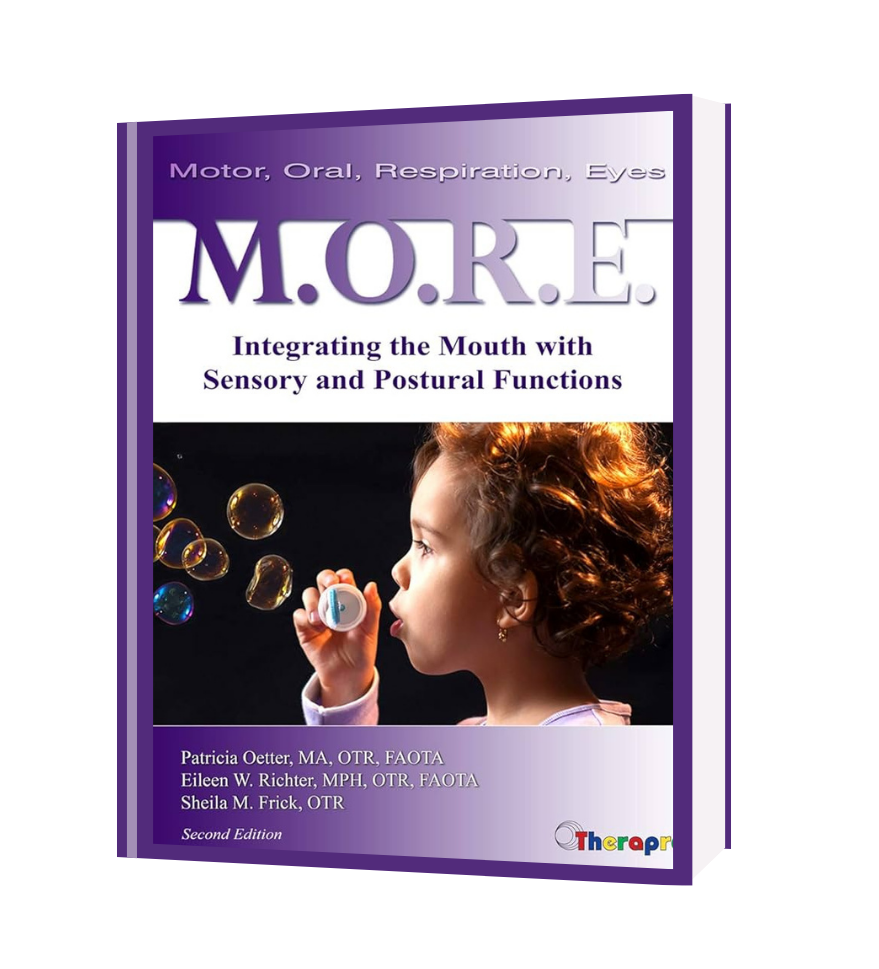
M.O.R.E.: Integrating the Mouth With Sensory and Postural Functions
M.O.R.E.: Integrating the Mouth With Sensory and Postural Functions is a comprehensive therapy resource that bridges sensory integration, oral-motor treatment, and postural development to help therapists, educators, and parents support functional outcomes in children. This updated second edition provides a practical framework for understanding and treating the interrelationship between oral-motor skills, sensory processing, and postural control—crucial components for regulation, attention, feeding, and motor planning. This edition includes a system for grading toys and materials using the M.O.R.E. format.
M.O.R.E. is an acronym for Motor components, Oral organization, Respiratory demands, and Eye contact and control; elements of toys and items that can be used to facilitate integration of the mouth with sensory and postural development, as well as self-regulation and attention.
Written by occupational therapists Patricia Oetter, Eileen Richter, and Sheila Frick, this therapy book is widely respected in the field of sensory integration. It includes clinical theory, case studies, treatment strategies, and equipment suggestions, making it an indispensable tool for those addressing feeding difficulties, sensory modulation, or postural instability in children with complex developmental needs.
Features:
- Authors: Patricia Oetter, MA, OTR; Eileen Richter, MPH, OTR/L, FAOTA; Sheila Frick, OTR/L
- Spiral bound, paperback, second edition
- Explains how oral-motor, respiratory, and postural functions integrate with sensory systems
- Includes theory, practical interventions, and treatment equipment suggestions
- Helpful for addressing self-regulation, feeding, attention, and motor coordination
Age:
- Designed for professionals working with infants, children, and adolescents
What’s In The Box:
- One paperback copy of M.O.R.E.: Integrating the Mouth With Sensory and Postural Functions, 2nd Edition
How To Use It:
- Use in therapy sessions to assess and treat oral-motor and postural challenges
- Develop treatment plans that integrate sensory and motor goals
- Apply strategies to address self-regulation and feeding challenges
- Educate parents and educators about the importance of oral-motor and postural integration